
Vertical Growth That Covers Structure Fast
Climbing Rose Collections in Houston for properties needing trellis coverage, arbor plantings, or repeat-blooming roses that scale fences and walls
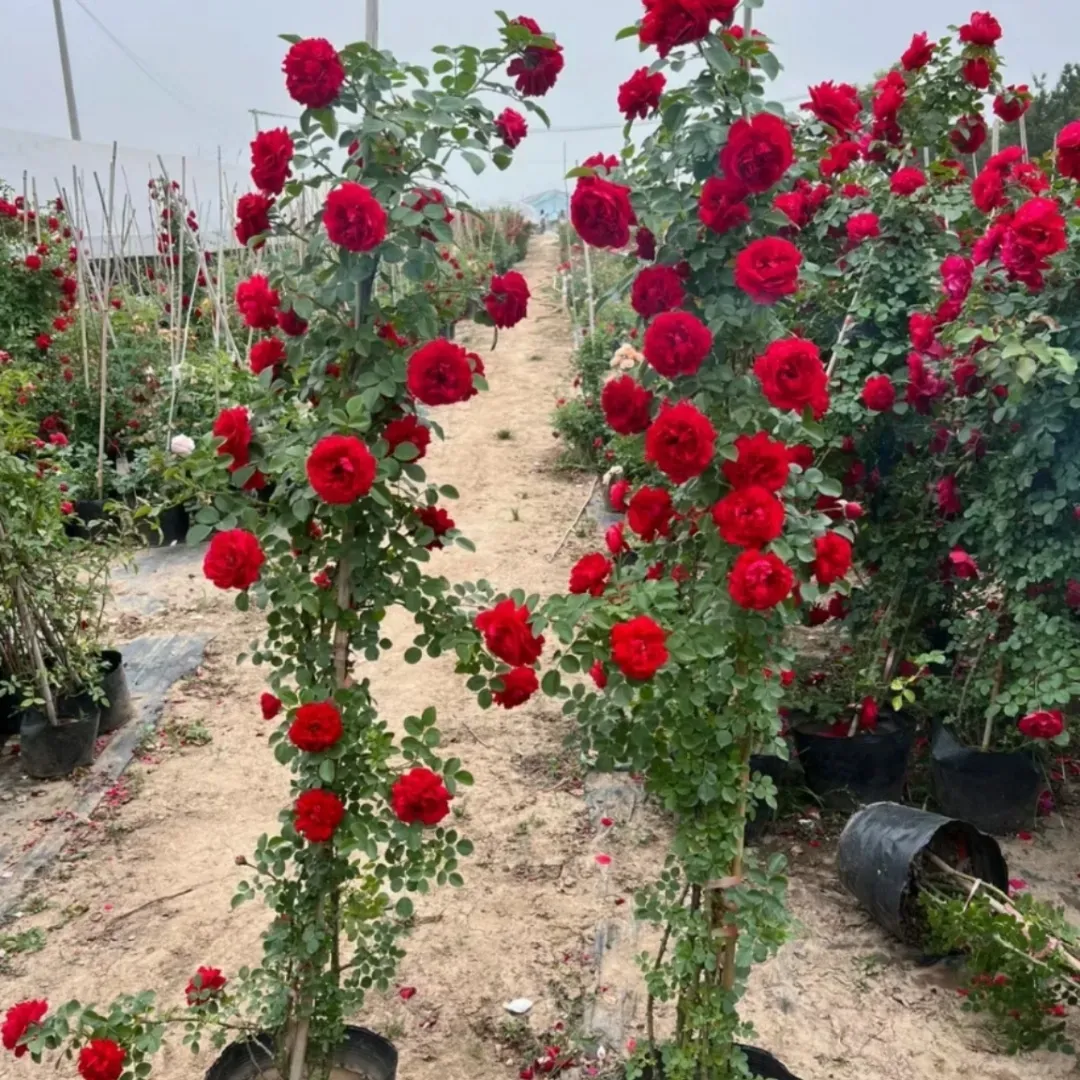
Climbing roses don't actually climb like vines—they produce long, flexible canes that must be tied to supports as they grow, and without regular training, they become sprawling shrubs rather than vertical features. Fast-growing climbers can add six to ten feet of cane length in a single season when planted in amended soil with consistent water, but that growth needs to be directed horizontally along the support structure before being allowed to grow upward, forcing lateral buds to break and produce the flowering spurs that cover the trellis or arbor with blooms. The Rare Petal Rose Garden sells climbing rose collections chosen for their repeat-blooming habit and fragrance, focusing on varieties that perform in Houston's heat rather than once-blooming ramblers that thrive in cooler climates but struggle with Gulf Coast summers.
Trellis and arbor roses need supports built from materials that won't conduct excessive heat, since metal structures can scorch canes during summer afternoons when temperatures exceed 95 degrees. Landscape design recommendations account for mature cane spread and the weight of fully bloomed plants, which can exceed what lightweight lattice or tension wire can hold once the rose reaches full size. Support structure guidance includes spacing horizontal wires or slats to allow airflow through the plant, reducing fungal pressure on interior foliage that stays damp in high humidity.
Arrange a consultation to review your support structure and confirm it can handle the mature size of your selected climbing variety.
What Changes After Climbers Are Established
First-year climbers focus energy on root development and may produce minimal bloom, but second-year plants generate the long canes that need training into horizontal or fan patterns across the support. As canes age, they develop short lateral shoots that carry the majority of the flowers, so older wood should remain in place rather than being pruned back to the base each year like some shrub roses. Fragrant climbing varieties often concentrate scent production in cooler morning hours, with fragrance intensity dropping as afternoon heat volatilizes the aromatic compounds faster than the flowers can produce them.
You'll notice that properly trained climbers bloom along the entire length of each cane rather than only at the tips, creating the full coverage that makes arbors and trellises look planted rather than sparsely decorated. Repeat-blooming types produce flushes of color every six to eight weeks during the growing season, with the heaviest bloom occurring in spring and fall when temperatures moderate and plants aren't stressed by extreme heat.
Some climbing roses are sports of bush varieties, meaning they produce the same flower as their parent plant but on a climbing framework, while others are bred specifically for vertical growth and may have smaller, more abundant blooms. Sports can occasionally revert, producing bush-type growth that should be removed to maintain the climbing habit.
Answers to Frequent Service Questions
Property owners often ask about training methods and selecting climbers that match their structure size and sun exposure.
What type of support structure works best for climbing roses?
Sturdy wooden trellises, arbors with posts set in concrete, or heavy-gauge wire attached to masonry provide the strength needed to support mature plants, while lightweight plastic lattice or thin wire typically fails within two to three years as cane weight increases.
How do I train climbing roses to cover an arbor?
Tie new canes horizontally along the structure using soft ties that won't cut into the bark, spacing them six to eight inches apart to encourage lateral bud break, then allow vertical shoots to grow upward from those horizontal canes to create full coverage.
When should I plant climbing roses in Houston?
Fall planting allows roots to establish before the plant puts energy into cane growth, giving you stronger first-year development, but container-grown climbers can be planted in early spring if you can provide consistent irrigation through the first summer.
What does repeat-blooming mean for climbing roses?
It indicates the variety produces multiple bloom cycles per season rather than flowering only once in spring, though individual flushes may be lighter during peak summer heat and heaviest during moderate temperatures in April, May, October, and November.
How fast do climbing roses actually grow?
Growth rate depends on soil quality, water availability, and the specific variety, but fast-growing climbers in Houston can produce eight to twelve feet of cane length annually, while moderate growers add four to six feet per year and require more time to cover large structures.
The Rare Petal Rose Garden provides guidance on matching climbing rose varieties to your available structure height, sun exposure, and desired bloom frequency. Call (308) 455-0539 to discuss which climbers suit your specific landscape needs.